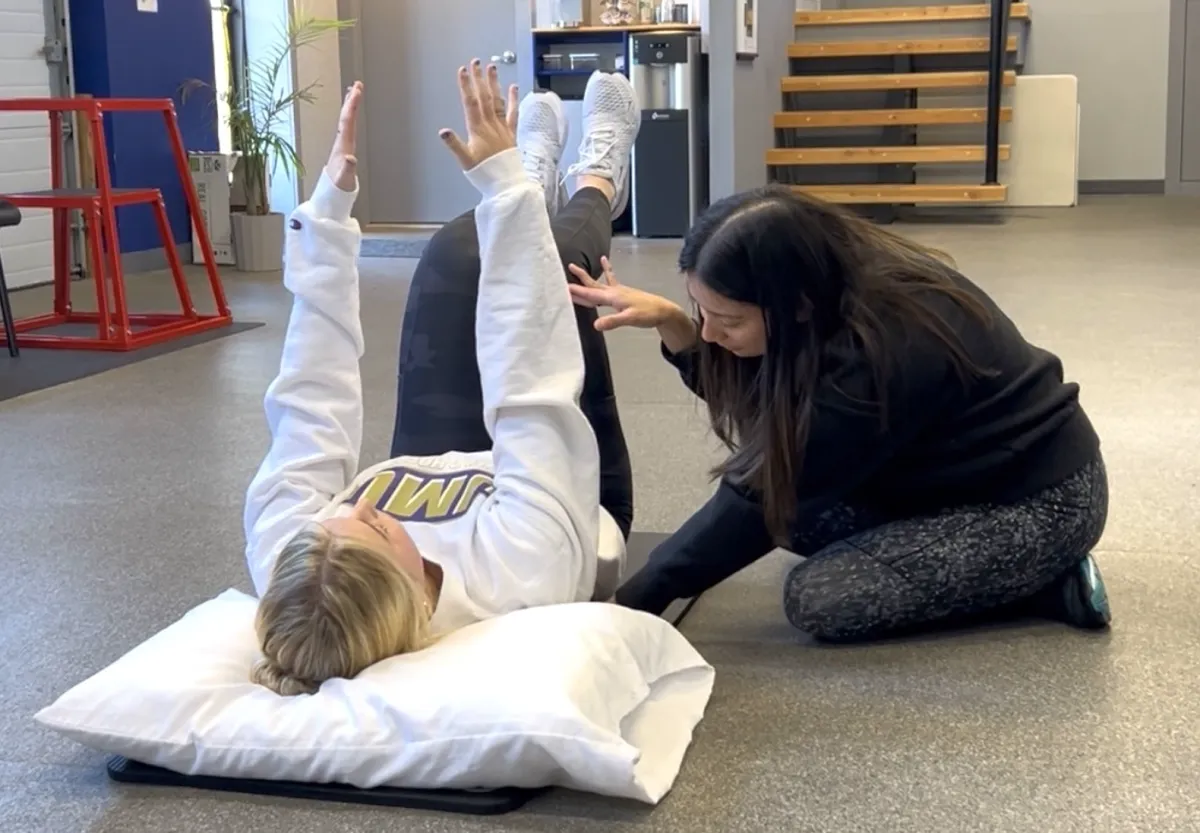
Shoulder Pain When Lifting? | Chester, NJ Physical Therapy
"I don't want to have to give up on my workouts because I'm feeling that pinching sensation."
"I don't know if I need rest. I'm just not sure."
We hear versions of these lines on calls every week at AMP Performance Rehab in Chester, NJ. It usually starts small. A pinch at the bottom of a bench press. A twinge pressing overhead. Then you swap barbell bench for dumbbells, then floor presses, then you skip push day altogether. Somewhere along the way you stop trusting your shoulder.
If that sounds like you, here's the honest answer to the question most gym goers are really asking: should you stop lifting, and what actually fixes it?
Why Your Shoulder Hurts When You Lift
"Shoulder pain when lifting" isn't one problem. It's a symptom. The most common drivers we see are:
- Irritated rotator cuff tendons. The small muscles that keep the ball of your shoulder centered get overloaded and cranky, usually with pressing, overhead work or high volume.
- A "pinching" feeling (often called impingement). Tissues at the top of the shoulder get squeezed when your arm goes overhead or across your body. Pinching is often a sign of how the shoulder is moving, not that something is torn.
- The front of the shoulder taking a beating. Deep bench presses, dips and wide-grip pressing stress the front of the joint and the biceps tendon.
- Everything around the shoulder. A stiff mid-back or shoulder blades that don't move well force the joint to do more than its share.
That last one is the piece most people never hear about. When your upper back can't extend and your shoulder blade can't rotate, the joint gets forced into positions it can't handle under load. Do that for a few hundred reps a week and the shoulder starts complaining.
That's why so many gym goers tell us some version of: "I've been weightlifting my entire life and never had any pain there." Nothing changed in one day. The load slowly outgrew how the shoulder was moving.
Should You Stop Lifting?
Usually, no. At least not completely.
Full rest can calm a flare-up. But weeks of doing nothing leave the shoulder weaker, so when you load it the same way again, the pain shows right back up.
The opposite approach doesn't work either. "I work out out of spite" is a line we've heard more than once, and pushing through sharp pain on every rep is how a cranky tendon turns into a months-long problem.
The middle ground is what works best for most people: keep training, but change what you do with the shoulder for a while. A simple rule of thumb many gym goers find helpful:
- Mild discomfort (roughly 3 out of 10 or less) during a lift that settles by the next day is usually OK.
- Sharp, pinching pain during the lift, or pain that's worse the next morning, means that exercise, that weight or that range needs to change for now.
For more on how to tell "good" discomfort from the kind that sets you back, read our post on exercising through pain.
Why Stretching, Band Work and Rest Often Don't Hold
Most people have tried the usual list before they call us: rest, stretching, foam rolling, a few sets of band external rotations, maybe a shot. Each can turn the volume down for a while. None of them change how your shoulder handles a heavy press. The problem isn't effort. It's guessing.
What Actually Fixes Shoulder Pain When Lifting
Lasting results usually follow three steps.
1. Find what's actually driving the pain. That means testing more than the sore spot. How do your shoulder blades move? Can your mid-back extend and rotate? Is one side weaker? Which lifts, grips and ranges bring on the pain, and which don't?
2. Modify, don't quit. Most people can keep training while the shoulder settles. That might mean a neutral grip instead of a straight bar, a floor press or a shorter range for a few weeks, landmine presses instead of strict overhead work, or a lighter weight with slower tempo. You keep your routine. The shoulder gets a break from what's irritating it.
3. Rebuild and load back up. Once the pain calms down, the real work starts. Restoring motion in the upper back and shoulder blade. Building strength in the rotator cuff and the muscles around the shoulder blade. Then progressing back to the lifts you care about: a heavy bench, strict pull-ups or a full CrossFit class.
At AMP, that's exactly how we work. It starts with AMP's Root Cause Assessment: 60 minutes, one on one with a Doctor of Physical Therapy, looking at your whole upper body, not just the spot that hurts. From there, the plan moves through Recover, Rebuild and Redefine, and we re-test every session so you can see whether you're making progress. You can read more about our approach on our shoulder pain physical therapy page.
When to Get Help (and When to See a Doctor First)
See a doctor promptly if you have any of these:
- You felt a pop and now can't lift your arm, or it's suddenly much weaker
- The shoulder looks deformed after a fall or hard hit
- Numbness, tingling or weakness running down the arm into the hand
- Shoulder pain that comes with chest pain, shortness of breath or sweating (call 911)
For everything else, it's time to get a professional opinion if:
- The pain hasn't improved after 2 to 3 weeks of modifying your training
- You've cut out pressing, overhead work or pull-ups and it still isn't getting better
- It wakes you up at night or you can't sleep on that side
- You've tried rest, stretching or a round of PT and it didn't hold
The longer it hangs around, the more you train around it. Many gym goers we see in Chester, NJ waited months longer than they needed to.
Not sure what's going on with your shoulder? Book a free discovery call with our team. Tell us what's happening, and we'll tell you honestly whether we think we can help.
Shoulder Pain When Lifting: FAQ
Is it a rotator cuff tear? Maybe, but most shoulder pain in gym goers is not a full tear. Many people over 40 have rotator cuff changes on an MRI with no pain at all, so a scan alone doesn't explain your symptoms. If your symptoms point to a tear or something that needs imaging, we'll tell you and coordinate with your doctor.
Should I keep doing bench press? Often, yes, with changes for a while: a narrower or neutral grip, a shorter range, a lighter weight or a floor press. If bench is sharply painful no matter what you change, switch to a variation that isn't, while you work on the cause.
How long until I can lift heavy again? It depends on what's driving the pain, how long you've had it and what "heavy" means for you. Some people feel a change in the first few visits. Getting back to full training takes longer. We'd rather give you an honest timeline than a quick promise.
Do you see patients from outside Chester? Yes. Gym goers come to us from Mendham, Long Valley, Far Hills, Bernardsville and Basking Ridge, among other towns.
Keep Training. Fix the Shoulder.
Shoulder pain doesn't have to mean giving up the gym. If you want to know what's actually driving it and get a clear plan to fix it while you keep training, schedule your free discovery call. It's a short call with our team, no pressure, and you'll walk away knowing your next step.
