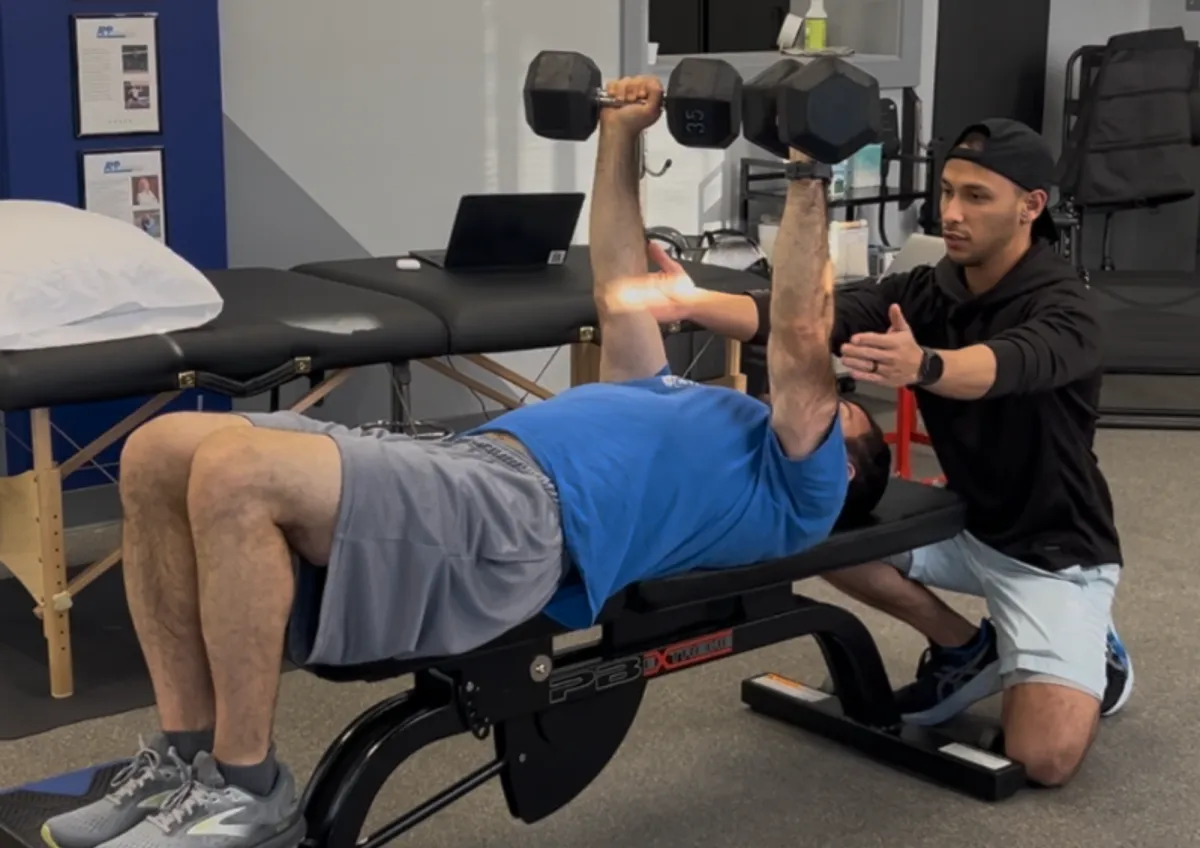
The Truth About Exercising Through Pain: Physical Therapy Chester, NJ
When something hurts, it can be hard to know what to do next.
Should you stop exercising completely?
Should you push through it?
Or is some pain okay?
At AMP Performance Rehab, we work with active adults who ask us these questions all the time. Many people are worried that exercising with pain will make an injury worse. Others keep pushing through because they do not want to lose progress.
The truth is, pain does not always mean you need to stop all activity.
The key is knowing which movements your body can handle right now and which ones need to be changed.
An Injury Doesn't Always Mean You Need to Stop Exercising
When pain shows up, rest can seem like the safest choice.
And sometimes, a short period of rest is helpful.
But completely avoiding activity for weeks or months does not prepare your body to return to the things you want to do.
If your goal is to get back to running, lifting, sports, or working out, your body eventually needs to be able to handle those demands again.
That's why we often look for exercise variations that allow you to keep moving and strengthen the injured area and the areas around it without making your symptoms worse.
Instead of asking, "Should I exercise or should I rest?"
A better question is:
"What can my body safely handle right now?"
How Do You Know If You Should Exercise Through Pain?
This is where things can get confusing.
Pain is not always as simple as "pain is bad" and "no pain is good."
How your symptoms respond during and after a movement can give you useful information about whether you should keep going, make a change, or stop.
At AMP, one tool we use with our patients is the stoplight rule.
It gives patients a simple way to understand what their body is telling them while they exercise.
The Stoplight Rule for Exercising With Pain
🟢 Green Light: Keep Going
If you can perform the movement without pain, you have a green light.
You can continue with the exercise as planned.
That does not mean you need to immediately add more weight or intensity. It simply means your body is tolerating the movement well.
🟡 Yellow Light: Continue With Caution
You feel some pain during the movement, but it stays around your normal baseline and does not continue getting worse.
This is a yellow light.
You may be able to continue, but you should pay attention to how your body responds.
Depending on the person and the injury, we may change the weight, range of motion, number of reps, or exercise variation to find something the body handles better.
🔴 Red Light: Stop or Change the Movement
You have pain during the movement, and it gets worse the more you continue.
That's a red light.
Instead of pushing through increasing pain, stop that specific movement.
But a red light does not necessarily mean you have to stop your entire workout.
It may simply mean that particular exercise, weight, range of motion, or movement is not right for your body right now.
A Red Light Today Doesn't Mean a Red Light Forever
This is an important part of injury recovery.
Let's say squatting hurts today.
That does not automatically mean:
"I can't squat anymore."
It might mean your body is not ready for that version of a squat yet.
With the right plan, you may spend time building strength, improving mobility, and increasing your body's ability to handle load.
Then you can try the movement again.
Something that was a red light a few weeks ago may eventually become a yellow light and then a green light.
That's progress.
The goal of physical therapy should not be to create a growing list of movements you need to avoid.
The goal is to help your body become strong enough to do more.
Modifying an Exercise Is Different From Avoiding It Forever
There is an important difference between modifying an exercise while you recover and deciding you can never do it again.
Maybe a full-depth squat hurts, but a shallower squat feels fine.
Maybe running hurts, but walking does not.
Maybe a heavy bench press bothers your shoulder, but a lighter variation feels good.
Those changes can allow you to stay active while your body builds the strength and tolerance needed for more demanding movements.
But the plan should keep moving forward.
If you spend months doing the same modifications without ever working toward the activity you actually want to return to, you can get stuck.
Why the Right Exercise Depends on the Root Cause
The stoplight rule can help you understand how your body responds to an exercise.
But there is still another important question:
Why is that movement painful in the first place?
Two people can have pain during the exact same exercise for very different reasons.
One person may need more strength.
Another may have limited mobility.
Someone else may be compensating because another area of the body is not doing its job.
That's why randomly choosing exercises based only on where you feel pain can be limiting.
At AMP Performance Rehab, we look at the full body to understand what may be contributing to the problem.
Once we understand the root cause, we can build a more purposeful plan around what your body needs.
How Performance Physical Therapy Helps You Stay Active
At AMP, our goal is not to tell active people to stop doing everything they enjoy.
We want to find ways to keep you moving while also helping your body become more prepared for the activities that matter to you.
That may mean changing an exercise for now.
It may mean lowering the weight.
It may mean building strength somewhere else first.
And as your body improves, we continue progressing your exercises so they become more like the activities you want to return to.
Because if you want to lift, your rehab should eventually prepare you to lift.
If you want to run, your rehab should eventually prepare you to run.
And if you want to return to a sport, your body needs to be prepared for the demands of that sport.
Not Sure Which Movements Are Safe for You?
If pain keeps forcing you to stop workouts, change exercises, or second-guess what your body can handle, you do not have to keep guessing.
At AMP Performance Rehab, our Root Cause Assessment helps us understand why your pain is showing up, what your body can safely handle now, and what needs to improve to get you back to the activities you love.
Request a Root Cause Assessment and get a clear plan for how to keep moving forward without simply pushing through pain or avoiding activity altogether.
Dr. Monica Moore, PT, DPT
Co-Owner & Physical Therapist
AMP Performance Rehab
Chester, NJ
https://www.ampperformancerehab.com/
Call or text: 862-500-4735
