Return to Running After Injury | Performance Physical Therapy for Runners in Chester, NJ
What Your Body Needs Before Your First Run Back
If you love running, you have probably been here before.
Something starts to hurt.
Maybe it is your knee.
Maybe it is your Achilles.
Maybe it is your shin, hip, or foot.
You take a few days off. You stretch more. You try a different pair of shoes. Then you test it with another run and hope it feels better.
Sometimes it does.
But then the pain comes back.
At AMP Performance Rehab, we work with runners who get stuck in this same cycle. They want to keep running, but they are not sure what their body needs to do it safely and consistently.
The problem usually is not a lack of effort.
It is a lack of a plan.
The Biggest Mistake Runners Make After an Injury
A lot of return-to-running advice sounds like this:
"If it doesn't hurt, try it and see what happens."
But that is not a real plan.
It’s guessing.
Running is not something your body can simply turn back on after an injury. It is a skill that requires strength, balance, control, and the ability to handle repeated impact.
If your body is not prepared for those demands, pain often returns as soon as your mileage or speed increases.
That's because running places unique demands on your body that everyday movement simply doesn't.
What Running Demands From Your Body
Every step you take while running places stress on your muscles, joints, and tendons.
Your body must be able to:
Absorb force
Stay balanced
Control movement
Produce power
Repeat the same motion thousands of times
Now think about how many steps you take during one run.
If one area is weak, stiff, or unable to handle the load, another part of your body may start doing extra work to make up for it.
That is when problems like these can show up:
Knee pain
Shin splints
Achilles pain
Hip tightness
Foot or heel pain
Hamstring strains
This does not mean your body is broken.
It may simply mean it is not fully prepared for the amount of running you are asking it to do.
Why Rest Alone Often Does Not Solve the Problem
Rest can help calm pain for a short time.
But rest does not always fix the reason the pain started.
If you stop running for a week or two, your symptoms may improve. But if you return to the same training without rebuilding strength or addressing what caused the pain in the first place, it often comes right back.
That is why many runners get stuck in this cycle:
Run → Feel pain → Rest → Feel better → Run again → Feel pain again
The goal should not be to avoid running forever.
The goal should be to prepare your body to handle running again.
Why Traditional Rehab Does Not Always Prepare Runners
So where does most rehabilitation fall short?
Many runners come to us and say:
"I already did physical therapy, but I still have pain when I run."
Often, their rehab included:
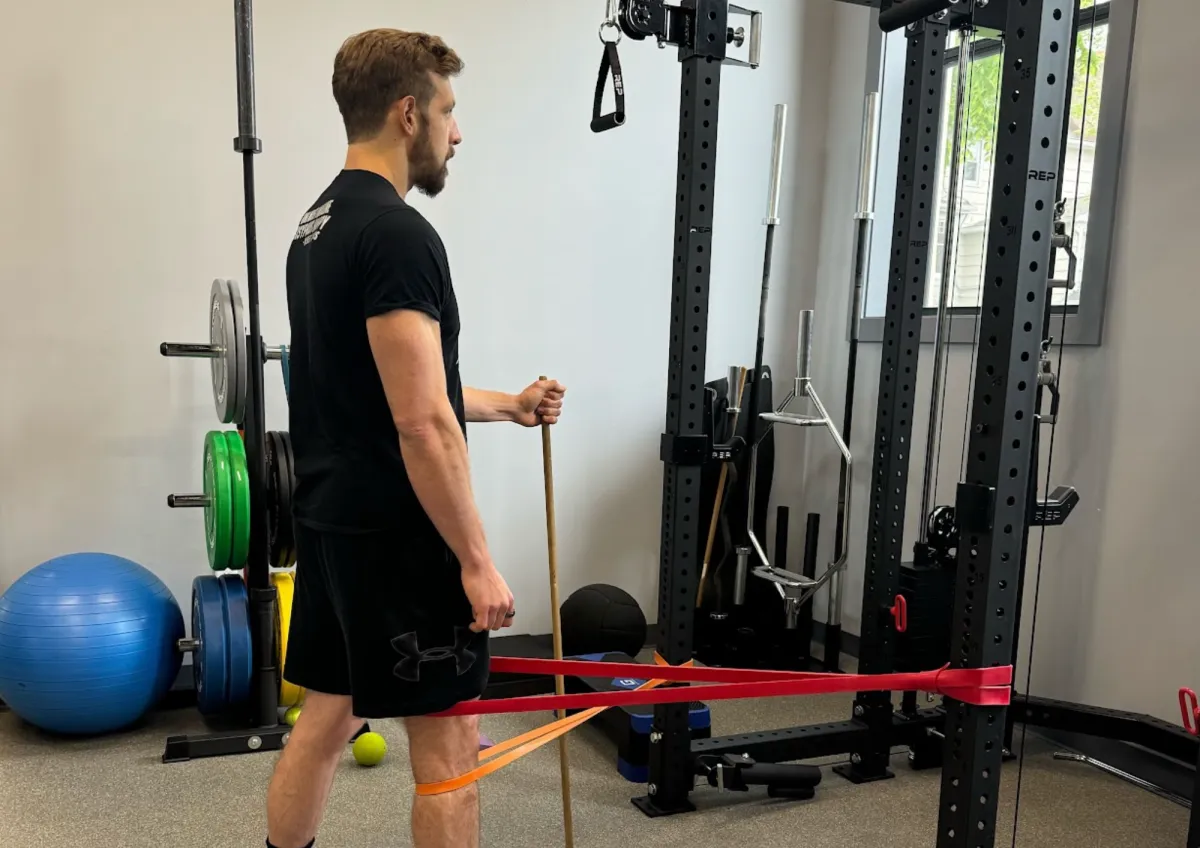
Table exercises
Light resistance bands
Basic strength work
Little or no running-specific training
Those exercises may be helpful early in recovery.
But they should not be the final step if your goal is to run.
As you recover, your rehab should gradually progress toward:
Single-leg strength
Balance and control
Hopping and jumping
Running drills
A gradual return to running and increased mileage
If your treatment never reaches those steps, your body may feel better during everyday activities but still be unprepared for the demands of running.
How Performance Physical Therapy Helps Runners
Many runners come to us after trying rest, stretching, or even physical therapy, only to have the pain return as soon as they start running again.
At AMP Performance Rehab, we take a different approach.
As a performance physical therapy clinic, our goal is not just to get you out of pain. We prepare your body for the demands of running so you can return with confidence.
That means rebuilding:
Strength
Balance and control
Impact tolerance
Running-specific movement
Because if your goal is to run, your rehabilitation should eventually look like running.
Instead of sending you back to training and hoping for the best, we create a step-by-step plan that safely progresses you back to the mileage, speed, and activities you enjoy.
It Starts With Finding the Root Cause
Pain is often the last thing to show up, not the first problem to develop.
That is why we do not just ask where it hurts.
We ask why it hurts.
During your Root Cause Assessment, we evaluate how your entire body moves, identify strength and mobility deficits, and uncover what is actually limiting your ability to run.
Because if you do not identify the root cause, it is easy to get stuck trying things that seem to help without ever knowing if they are solving the real problem.
From there, we create a personalized plan to help you build strength, improve your running capacity, and reduce the risk of the same injury coming back.
Ready to Run Without Second-Guessing Every Step?
If pain keeps interrupting your training, it may be time to stop guessing and start understanding what is actually causing it.
At AMP Performance Rehab, our Root Cause Assessment helps runners identify the source of their pain and creates a personalized plan to help them return to running stronger and with more confidence.
Request a Root Cause Assessment today by clicking this link!
We'll identify what's keeping you from running pain-free and create a plan to help you get back to the miles you love.
Dr. Monica Moore, PT, DPT
Co-Owner & Physical Therapist
AMP Performance Rehab
Chester, NJ
https://www.ampperformancerehab.com/
Call or text: 862-500-4735
